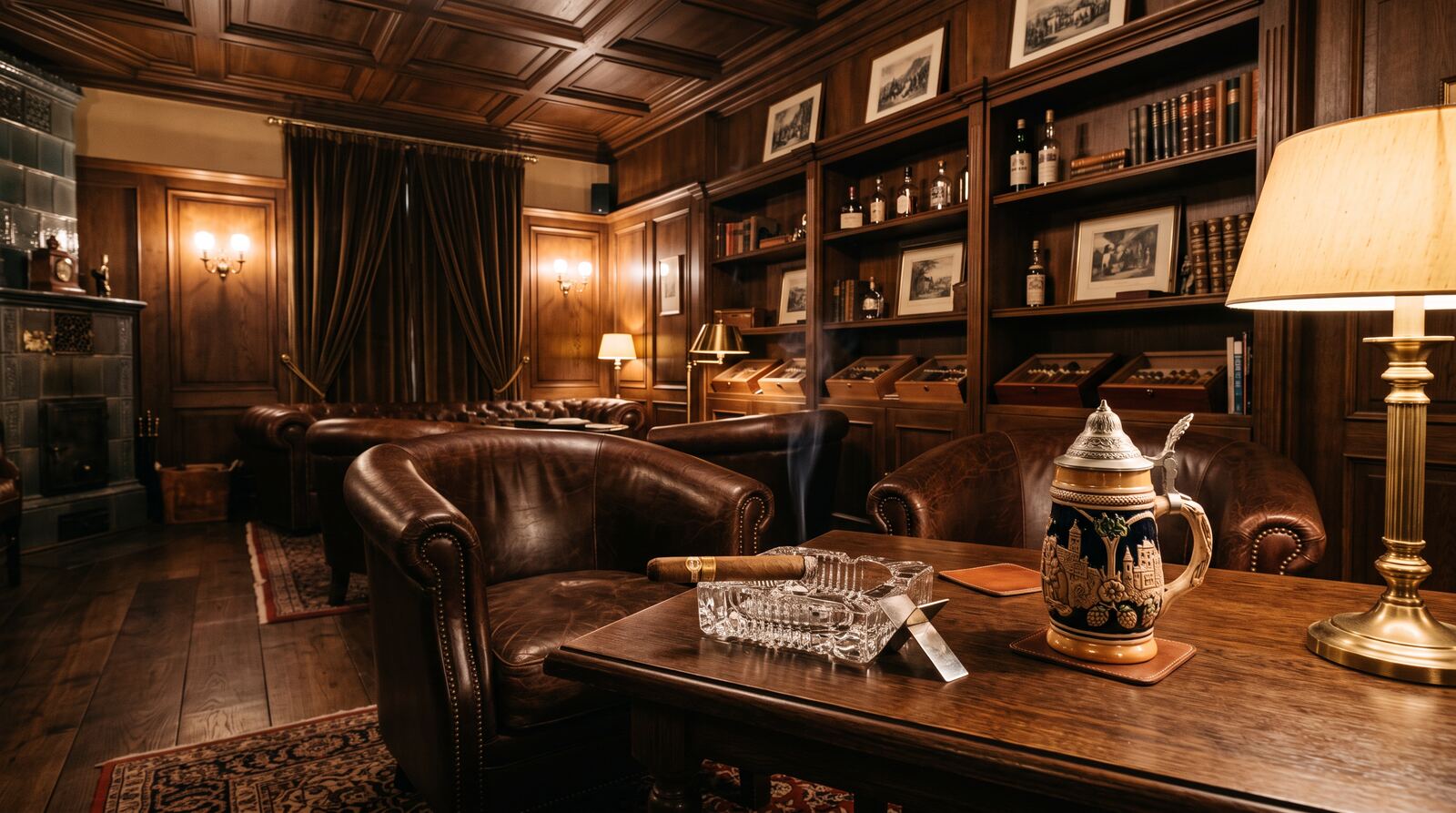
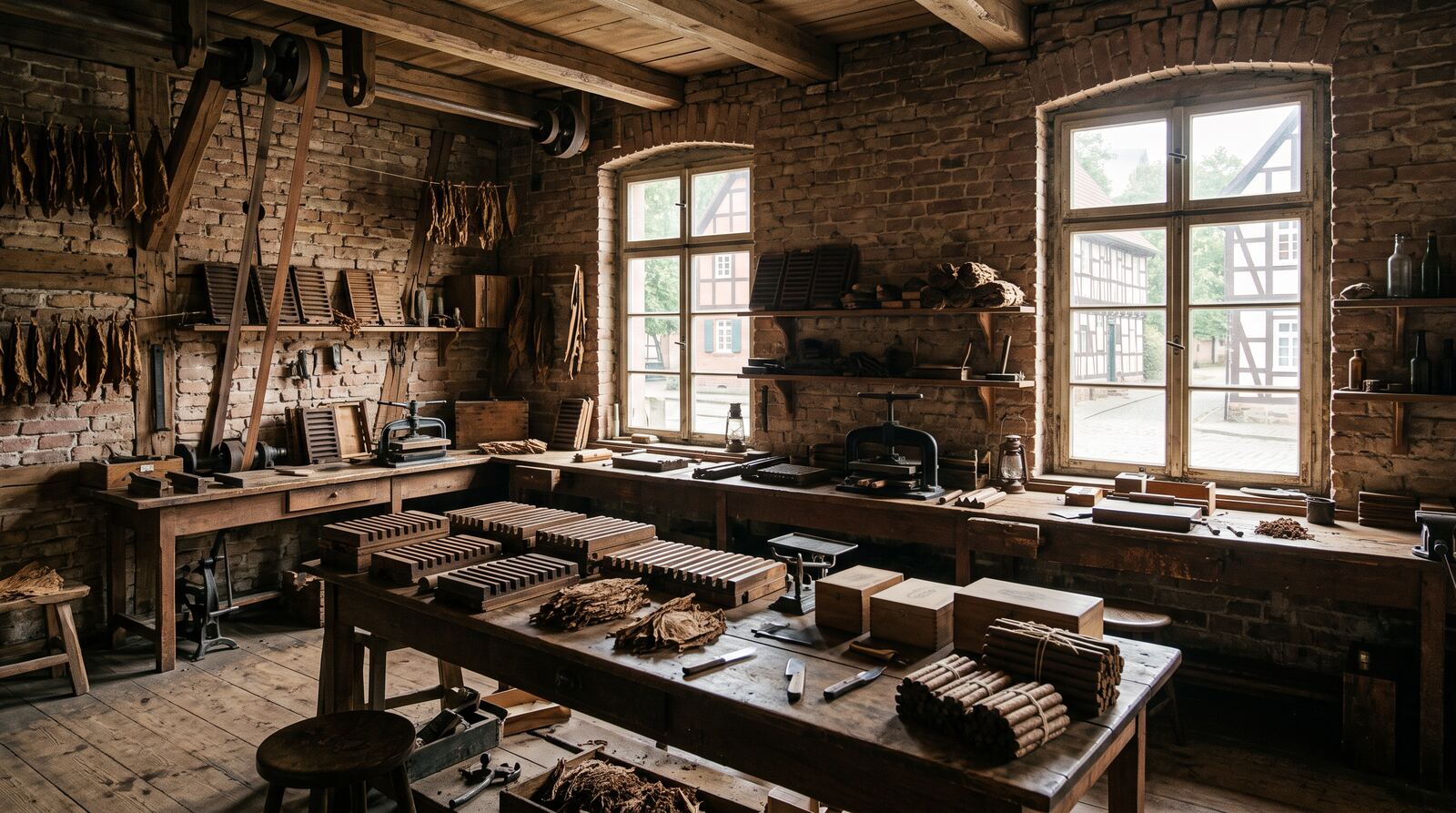

Germany is one of Europe's biggest cigar markets and home to some of its oldest cigar companies. Its tradition is different from the Caribbean's: most German cigars are dry-cured, machine-made cigars and cigarillos blended from Indonesian, Brazilian and Caribbean tobacco, sold in tins and boxes at tobacconists across the country. Germany also has a lively premium-cigar scene, with cigar lounges, specialist shops and a large Cuban cigar market, because Habanos are legal there.
This is an independent, educational guide. We do not sell tobacco and are not owned by any company named here; some pages contain labeled affiliate links.
Germany's Cigar Makers
The largest German cigar maker is Arnold André, founded in 1817 and based in Bünde since 1851, best known for Clubmaster cigarillos. Villiger, a Swiss family firm founded in 1888, has produced in Germany since 1910. Dannemann began in 1873 when a young man from Bremen opened a cigar factory in Brazil. Meet them all in German cigar brands.
The Cigar Town of Bünde
In the 19th century the small Westphalian town of Bünde became the center of German cigar-making. By 1900 more than 3,000 people there worked in the trade, and the town still has a tobacco and cigar museum. Read the story in Bünde, Germany's cigar town.
Bremen and the Tobacco Trade
Germany grows little tobacco for cigars. For centuries its leaf arrived by ship, and the North Sea ports of Bremen and Hamburg became major tobacco markets. Bremen is where Gerhard Dannemann learned the trade before sailing to Brazil, and where Bünde's first cigar maker, Tönnies Wellensiek, learned to roll. See Dannemann cigars.
What German Cigars Taste Like
Classic German cigars and cigarillos are usually mild to medium, dry and quick to smoke. Many use Sumatra or Java leaf from Indonesia and Mata Fina from Brazil. The style is close to the Dutch tradition covered on our sister site, what is a Dutch cigar. For handmade premium cigars, German smokers turn mostly to Cuba, the Dominican Republic and Nicaragua; see Nicaraguan cigars.
Smoking Rules and Travel
Germany's smoking laws are set mostly by its 16 states, so a cigar is welcome in some bars and banned in others. The buying age is 18. Visitors from outside the EU can bring in 50 cigars duty-free. Details are in smoking in Germany.
Cigars and German Beer
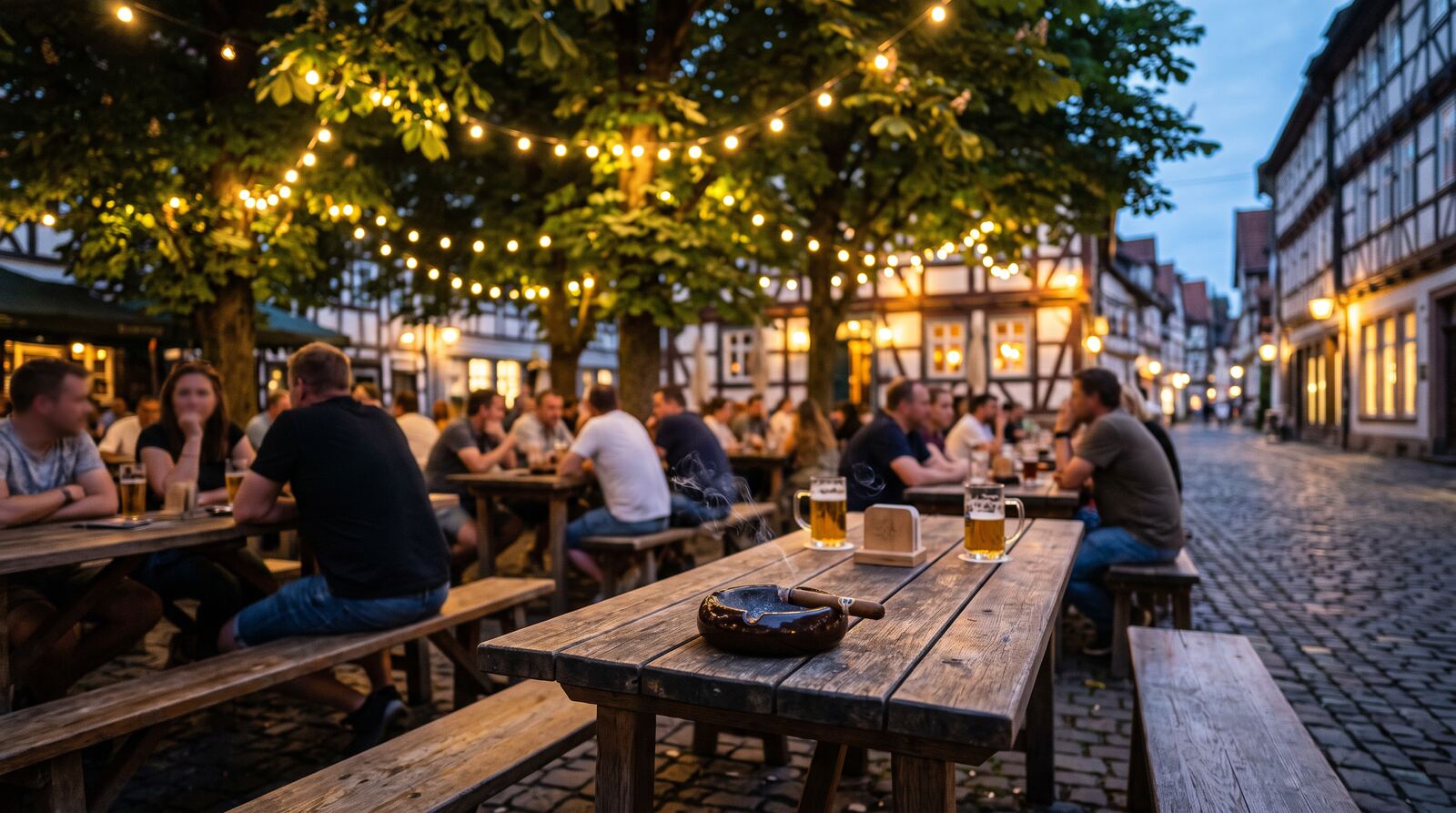
In Germany a cigar is often paired with beer rather than spirits. A malty Bock or dark Dunkel stands up to a medium or full cigar, while a crisp Pilsner suits a mild cigarillo on a summer terrace. Our sister site covers bourbon and cigar pairing if you prefer something stronger. Whatever you pour, match strength with strength.
Part of a Larger Map
Cigars Germany is one of the guides in the Cigars North America network, a collection of independent guides to the world's cigar regions. For storage, see cigar humidors.
Where to buy (affiliate link): Shop Villiger cigars at Famous Smoke Shop. Famous Smoke Shop is a licensed U.S. retailer that requires customers to be 21 or older. If you buy through this link we may earn a commission at no extra cost to you. Affiliate disclosure.
Frequently Asked Questions
Are cigars made in Germany?
Yes. Germany has a long cigar industry; the largest maker, Arnold André, has been based in Bünde since 1851.
What is the most famous German cigar brand?
Clubmaster cigarillos from Arnold André are among the best known; Dannemann and Villiger are also major brands sold in Germany.
Are Cuban cigars legal in Germany?
Yes. Germany is not covered by the U.S. embargo, so Cuban cigars are sold legally there. U.S. travelers still cannot bring them home.
What is the smoking age in Germany?
18. The minimum age for buying tobacco was raised from 16 to 18 in 2007.
How many cigars can I bring into Germany?
Travelers 17 and over arriving from outside the EU can bring 50 cigars duty-free, or a proportionate mix of tobacco products.